

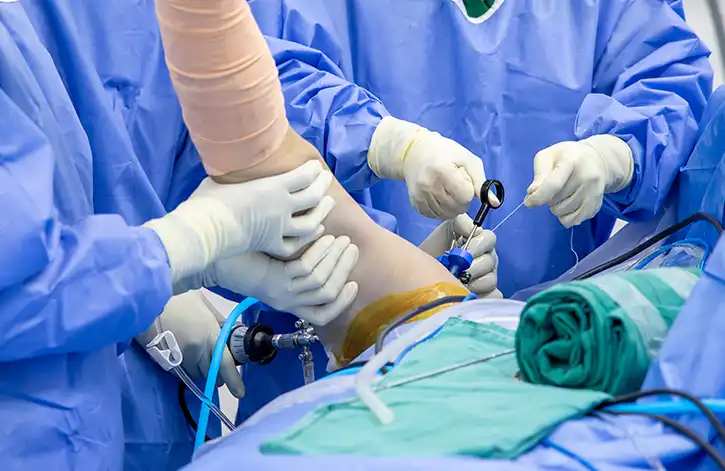
Shoulder pain can make it difficult to lift, reach, or even sleep comfortably. When medicines, exercises, or injections don’t bring relief, doctors may recommend a shoulder arthroscopy, a minimally invasive procedure to see and treat problems inside the shoulder joint.
It’s a small surgery with big benefits, helping doctors fix joint issues without large cuts.
What Is Shoulder Arthroscopy?
Arthroscopy comes from two Greek words, arthro (joint) and skopein (to look). So, shoulder arthroscopy means “looking inside the shoulder joint. In this procedure, the doctor uses a tiny camera called an arthroscope, inserted through a small cut in the skin.
The camera shows clear images of the inside of the joint on a monitor, allowing the surgeon to diagnose and treat shoulder problems accurately.
Why Is Shoulder Arthroscopy Done?
- Repair rotator cuff tears: Common cause of shoulder pain. This helps restore shoulder strength and allows you to lift or reach without pain.
- Remove bone spurs or loose fragments: These small bony or tissue pieces can cause irritation and limit smooth joint movement..
- Treat shoulder impingement: (when tissues rub painfully). The procedure creates more space inside the joint so the tendons can move freely.
- Fix shoulder instability or dislocation. It tightens or repairs the torn ligaments, helping prevent future dislocations.
- Remove inflamed tissue or calcium deposits. This reduces swelling and stiffness, making it easier to move your arm comfortably. It can also be used to diagnose unexplained shoulder pain when other tests (like MRI) are unclear.
How the Procedure Works?
- Anesthesia: You’re given general or local anesthesia so you don’t feel pain.
- Small incisions: The surgeon makes two or three small cuts (less than 1 cm each).
- Inserting the camera and tools: A small camera (arthroscope) is inserted to view the joint and tiny surgical tools are used to repair or remove damaged tissue.
- Finishing up: The cuts are closed with small stitches, and a dressing is applied.
The whole surgery usually takes 30 minutes to 1 hour.
Benefits of Shoulder Arthroscopy
Compared to open surgery, arthroscopy offers many advantages:
- Smaller cuts and scars
- Less pain and blood loss
- Faster recovery time
- Lower infection risk
- Better movement and flexibility after healing
Because of these benefits, many patients can return home the same day.
Recovery After Shoulder Arthroscopy
Recovery depends on what was treated during surgery. Here’s what most patients experience:
- Sling use: You may need to wear a sling for a few days to weeks.
- Pain control: Mild pain is managed with medication and ice packs.
- Physiotherapy: Exercises start soon to restore shoulder movement.
- Return to routine: Most patients return to light activities in 2–4 weeks and full recovery in 2–3 months.
Possible Risks (Though Rare)
Shoulder arthroscopy is very safe, but as with any surgery, small risks exist:
- Infection
- Stiffness or swelling
- Bleeding or nerve injury (rare)
- Delayed healing if rehab is ignored
Your surgeon will guide you on how to avoid these issues.
Self-Care Tips After Surgery
- Keep the dressing clean and dry.
- Avoid lifting heavy objects for at least a few weeks.
- Take pain medicines only as prescribed.
- Start gentle shoulder exercises when advised.
- Eat a balanced diet rich in protein and vitamins.
These steps help speed up recovery and prevent stiffness. Shoulder arthroscopy is a safe and effective way to diagnose and fix shoulder problems without major surgery. It helps reduce pain, restore movement, and get you back to normal life quickly.


